Mechanical: AC, ventilation and ducting
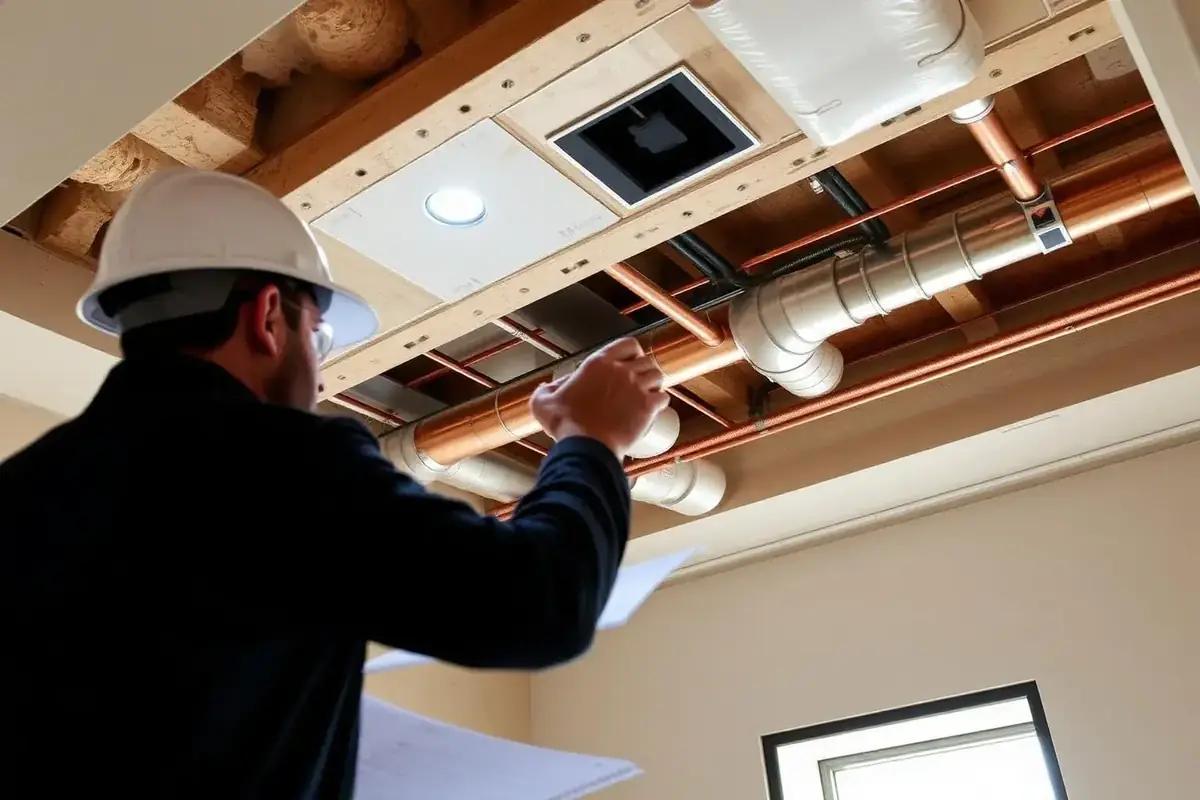
Older Dubai villas frequently have undersized or aged AC systems. A renovation is the right moment to right-size: load calculations per room, FCU placement coordinated with ceiling design, ducting routed cleanly through the bulkhead. Replacing rather than patching usually pays back within 5 years through energy savings alone.
Add fresh-air ventilation in habitable rooms — most villas built before 2015 don't have it, and indoor air quality suffers as a result. A simple ERV (energy recovery ventilator) tied into the existing duct path solves it.
Electrical: DB panel, circuits and protection
Most villa renovations should include a full DB panel upgrade. Older panels lack RCD protection on bathroom and kitchen circuits, run undersized cabling for modern loads (split AC, water heaters, EV chargers), and have no segmentation for high-draw appliances. Upgrading is far cheaper than relying on an undersized old panel and dealing with constant trips.
Plan for the future: dedicated EV charger circuit, smart-home wiring backbone (Cat6A to every key room), discrete dimming circuits for lighting design, and emergency lighting in stairs and corridors.
Plumbing: re-piping decisions
Galvanised steel piping reaches end of life around 25–30 years. If your villa is older and the renovation already opens walls or floors, re-pipe in PPR or copper now. Doing it later when the finishes are in is several times more expensive and messy. Hard-water scaling on water heaters should be addressed at the same time — descale or replace, and add a basic whole-house softening if you're already doing the work.
Coordination — the part where renovations fail
Most MEP problems on Dubai renovation sites come from three trades blaming each other. The fix is one project manager coordinating all three, weekly trade meetings, and shop drawings issued before any service hole is cut. We run renovations this way as a default — separate trades, single command structure.