Roof and terrace waterproofing
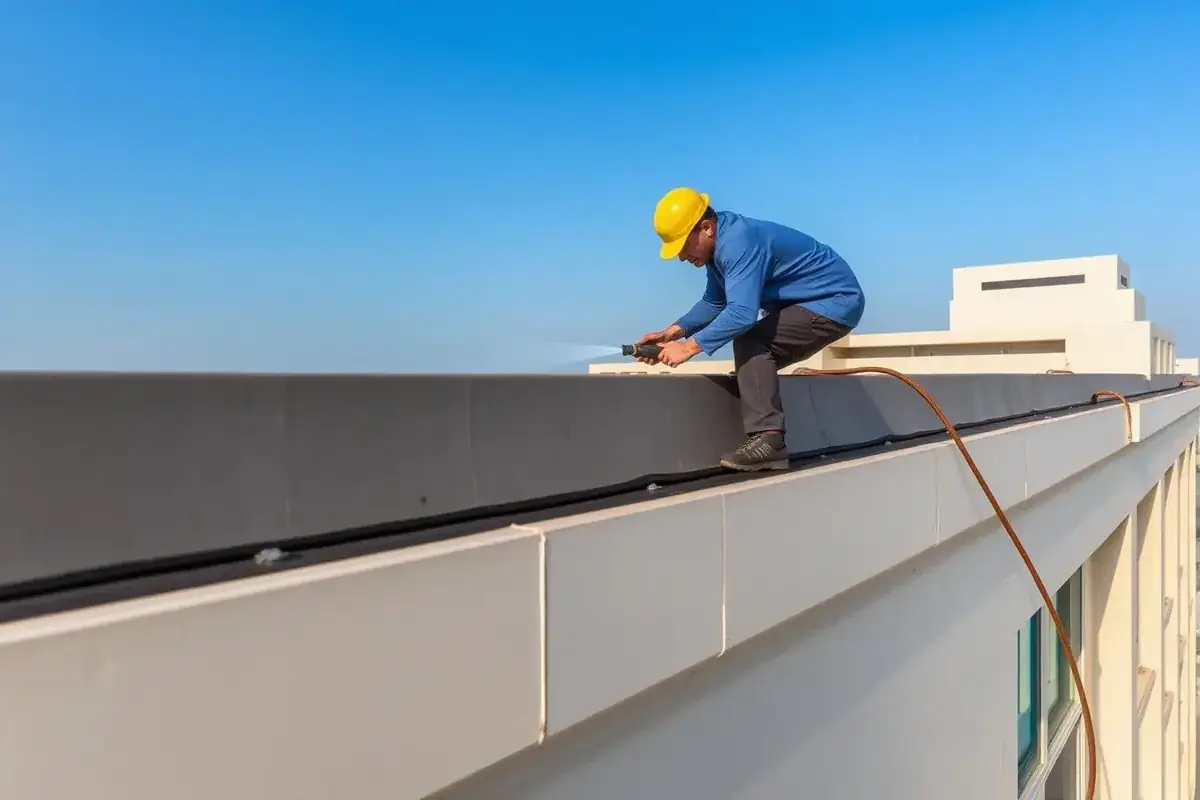
Two systems dominate: liquid-applied polyurethane membrane (PU) and reinforced bitumen membrane. PU is faster to apply, fully bonded, and easy to detail around penetrations — ideal for villa roofs and terraces with planters or pavers above. Bitumen membrane has longer track record on heavy commercial roofs but needs careful seam detailing.
Either system fails at penetrations and upstands rather than across the flat field. We give extra detail at parapets, scuppers, drain bodies, AC condensate outlets and any pipe through the membrane.
Bathroom and wet-area waterproofing
Bathroom failures usually start at the floor-wall junction and around the shower drain. We apply liquid-applied membrane with reinforcement fabric at all junctions, return it 200 mm up the wall, and fully detail around the drain body before tiling. Flood test before tiling — if you skip the test, you'll find the leak through the tenant downstairs.
Basement and below-ground
Below-ground waterproofing is the hardest to repair if it fails — once buried, access for remedial work is brutal. New basements get a multi-layer system: positive-side membrane, drainage board, and crystalline waterproofing added to the concrete mix as a redundant layer. Existing leaking basements are usually fixed from the inside with injection grouting and crystalline application.
Diagnosing leaks before opening surfaces
We trace leaks with moisture meters and where needed thermal imaging before deciding what to open. Most leaks are not directly above the visible damp patch — water travels along beams, decking and pipe paths. Diagnose first, open the smallest possible area, fix the source, then reinstate.